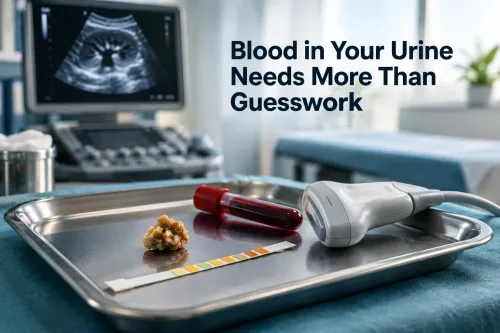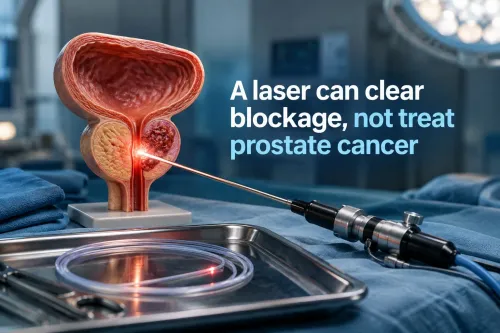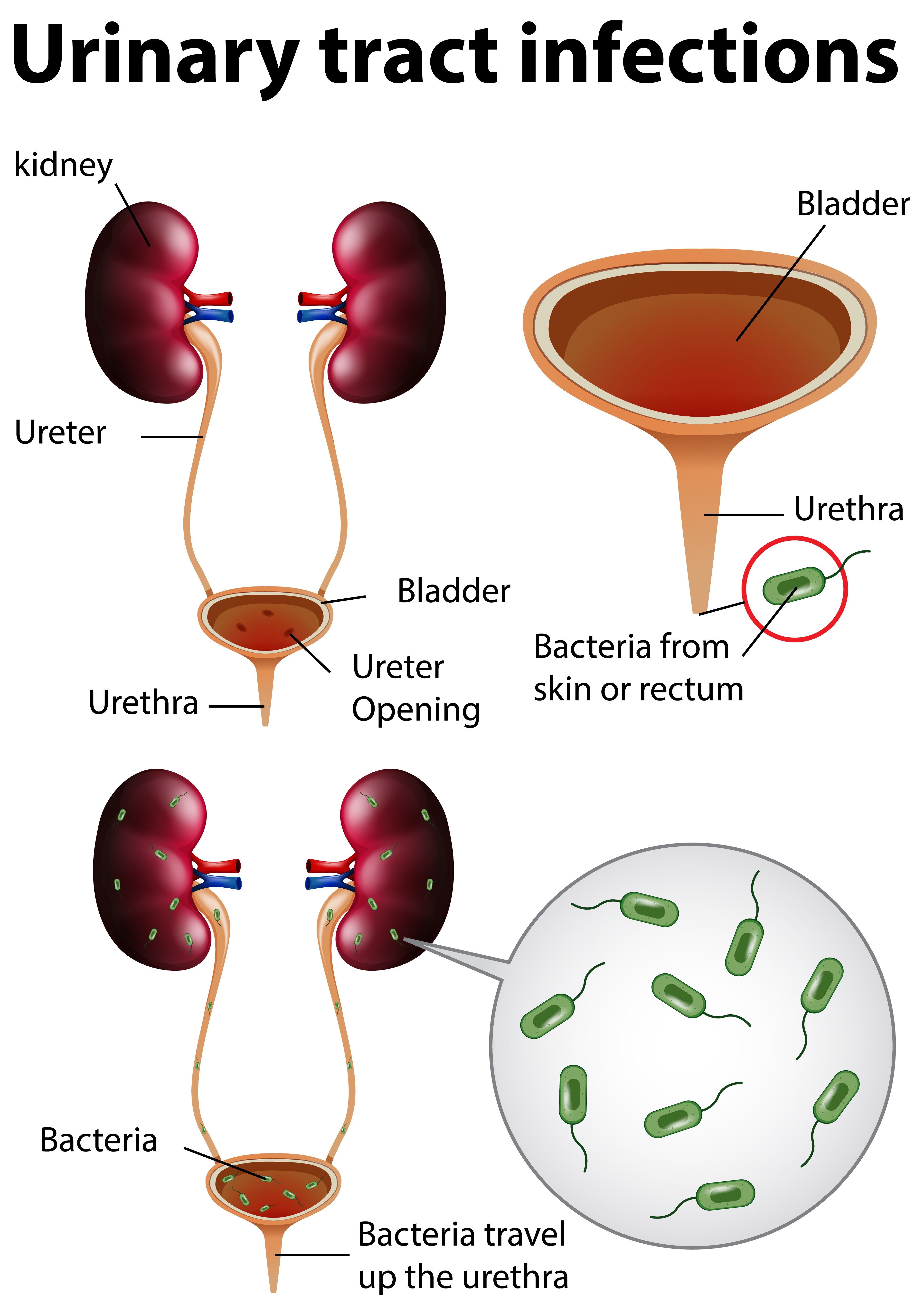
Prostate laser surgery does not kill the bacteria causing a urinary tract infection; it removes or vaporises prostate tissue that blocks urine flow. You will learn how clinicians prove that obstruction is contributing to recurrent infections, how infection is handled before surgery, and which symptoms during recovery need urgent assessment.
Key takeaways
- Treat active infections with culture-guided antibiotics, not laser surgery.
- Check urine culture, prostate obstruction and kidney function before surgery.
- Burning and urgency after surgery can reflect healing, infection or retention.
- Choose surgery when obstruction drives recurrent infections despite appropriate treatment.
Does prostate laser surgery treat the infection itself?
No. Prostate laser surgery for urinary tract infections in Pune does not replace antibiotics, urinalysis or urine culture. An active infection needs antimicrobial treatment selected using the culture result and, when available, its susceptibility report.
“Laser surgery” describes different procedures, not one operation:
- HoLEP removes obstructing prostate tissue by enucleating it with a holmium laser.
- Thulium-based procedures remove or resect enlarged tissue.
- Photoselective vaporisation (PVP) vaporises tissue blocking urine flow.
These procedures treat obstruction, not bacteria. An enlarged prostate can leave residual urine in the bladder, creating urinary stasis where bacteria persist and infections recur. Removing the blockage can improve emptying and reduce that infection-promoting environment, but the laser does not directly kill the organisms causing a current UTI.
Recurrent UTI alone does not prove that surgery is necessary. Before recommending it, a urologist looks for demonstrable bladder-outlet obstruction, high post-void residual urine, recurrent retention, bladder stones or another correctable abnormality. Burning, urgency and frequency can also result from obstruction, stones, catheter irritation or inflammation, so symptoms alone cannot confirm infection.
Elective surgery is usually planned after an active infection has been identified and treated.
How can prostate obstruction cause recurrent urinary infections?
An enlarged prostate can narrow the bladder outlet, making the bladder work harder and preventing complete emptying. The urine left behind—called residual urine—creates a reservoir in which bacteria can persist, so infections return after treatment.
Recurrent retention strengthens the link. High residual urine, bladder outlet obstruction, or bladder stones can support a discussion about removing obstructing prostate tissue, but recurrent UTI alone does not prove that laser surgery is needed.
A urologist for urinary tract infections in Pune may use these checks to find the cause:
- Urinalysis to look for blood, white cells and other infection markers
- Urine culture to identify bacteria and guide antibiotic choice
- Post-void residual measurement, using ultrasound or a bladder scan, to measure urine left after urination
- Uroflowmetry to record flow rate and detect an obstructed pattern
- Ultrasound to assess the kidneys, bladder, residual urine and stones
- Prostate assessment, including examination and other tests when indicated
- Kidney-function testing when retention, obstruction or recurrent infection raises concern
Stones, urethral stricture, diabetes, neurogenic bladder and contaminated catheters can cause infections through different mechanisms. They need targeted treatment; prostate surgery will not correct them. Burning or frequency can also come from stones, obstruction or inflammation, so symptoms alone cannot establish a UTI.
What must be checked before prostate laser surgery?
Elective prostate laser surgery should proceed only after clinicians assess and control any active infection. Operating through untreated infection raises the risk of postoperative fever, sepsis and other complications. Burning, urgency and frequency alone do not prove a bacterial UTI; obstruction, prostatitis, kidney infection, catheter irritation and sexually transmitted infections can produce similar symptoms.
- Report fever, chills, painful urination, cloudy or foul-smelling urine, flank pain, pelvic pain, discharge and difficulty emptying your bladder. Fever with flank pain or vomiting needs prompt assessment for kidney infection.
- Provide a urine sample for urinalysis and urine culture, ideally before starting an antibiotic. The culture identifies bacteria and shows which antibiotic is likely to work. Clinicians may request it despite mild or absent symptoms because an enlarged prostate, catheter or recent instrumentation can hide infection, and bacteria in urine can complicate surgery.
- Ask whether symptoms fit prostatitis, bladder outlet obstruction or catheter irritation rather than a bladder infection. If discharge or sexual exposure is relevant, request testing for sexually transmitted infection; antibiotics for a UTI may not treat it.
- Complete the prescribed treatment and ask specifically, “Should surgery be postponed until infection control?” The urologist may repeat urinalysis or culture before operating, especially after resistant bacteria, recurrent infections or catheter use. A negative culture does not remove the need to investigate poor emptying or another cause of symptoms.
What do urinary symptoms after prostate laser surgery mean?
Burning, urgency, frequent urination, a weak or intermittent stream, and pink or blood-tinged urine can occur during prostate laser surgery recovery in Pune. Urethral irritation, bladder healing, catheter use and instrumentation can cause these symptoms for several weeks; they do not automatically mean that a UTI has returned.
- Follow the recovery pattern: many patients have the catheter removed within roughly one to two days and resume light activity within days. Avoid heavy lifting and strenuous exercise until your operating urologist permits them.
- Contact your surgical team if irritation persists or worsens. Urinalysis and urine culture help separate inflammation, catheter irritation and obstruction from infection; symptoms alone cannot do that.
- Seek urgent medical assessment for fever, chills or rigors, worsening pain, confusion, inability to pass urine, heavy bleeding or clots, flank pain, vomiting, or feeling acutely unwell. Do not self-start leftover antibiotics.
A positive culture does not automatically mean surgical failure. Clinicians distinguish asymptomatic bacteriuria, catheter-associated bacteriuria and symptomatic UTI before prescribing antibiotics, because unnecessary treatment causes side effects and promotes resistance.
Urinary tract infections after prostate surgery in Pune remain possible while a catheter, residual urine or healing tissue is present. A culture result must be interpreted alongside your symptoms, examination and recovery pattern; prostate laser surgery can improve obstruction without preventing every infection.
When is laser surgery a reasonable choice for recurrent infections in Pune?
Recurrent infections alone do not justify prostate laser surgery. The case becomes reasonable when testing shows that benign prostate enlargement is causing bladder-outlet obstruction, high post-void residual urine, repeated retention, bladder stones or another correctable abnormality that leaves bacteria behind.
Use this decision sequence:
- Confirm the cause. Review urine cultures, antibiotic results, urinalysis, residual urine, uroflowmetry, ultrasound and prostate findings. Burning or urgency can also come from stones, catheter irritation or inflammation, not infection.
- Measure the infection risk. An indwelling catheter, diabetes, previous resistant organisms, prolonged hospitalisation and incomplete emptying can make recurrence more likely, but each risk still needs its own management.
- Treat the active infection first. Laser surgery removes or vaporises obstructing tissue; it does not kill bacteria. Do not proceed on the assumption that surgery replaces culture-directed antibiotics.
- Compare the procedure’s trade-offs. HoLEP or thulium enucleation can remove more tissue and allow tissue retrieval for examination; vaporisation avoids retrieving a tissue specimen. Discuss bleeding, catheter duration, retrograde ejaculation or dry orgasm, temporary urgency or leakage, and uncommon persistent stress incontinence.
VANDANA URO CARE can review your cultures, residual urine, imaging, medicines and prostate findings in Pune before advising whether obstruction treatment belongs in the plan. After surgery, a catheter and healing tissue can still raise infection risk, so fever, chills, worsening pain, confusion or inability to urinate needs urgent assessment.
Related services
Prostate Laser Surgery Prostate laser surgery is used to relieve moderate to severe urinary symptoms caused by an enlarged prostate — a condition known as benign prostatic... View service → |
General Appointment ₹800 General Appointment |
Frequently asked questions
Does prostate laser surgery treat the infection itself?
No. Active urinary infections require urinalysis, urine culture and antimicrobial treatment selected using the culture and susceptibility report when available.
How can prostate obstruction cause recurrent urinary infections?
An enlarged or obstructing prostate can prevent complete bladder emptying. Residual urine gives bacteria a place to persist and infections to recur.
What must be checked before prostate laser surgery?
Your urologist should assess urine infection with urinalysis and culture, measure obstruction and residual urine, and review kidney function, medicines and prostate findings.
What do urinary symptoms after prostate laser surgery mean?
Burning, urgency or frequency can occur during recovery, but fever, worsening pain, inability to urinate or foul urine needs prompt medical assessment for infection or retention.
When is laser surgery a reasonable choice for recurrent infections in Pune?
It is reasonable when a confirmed prostate obstruction causes poor bladder emptying or repeated infections, and medicines or other measures do not address the obstruction.