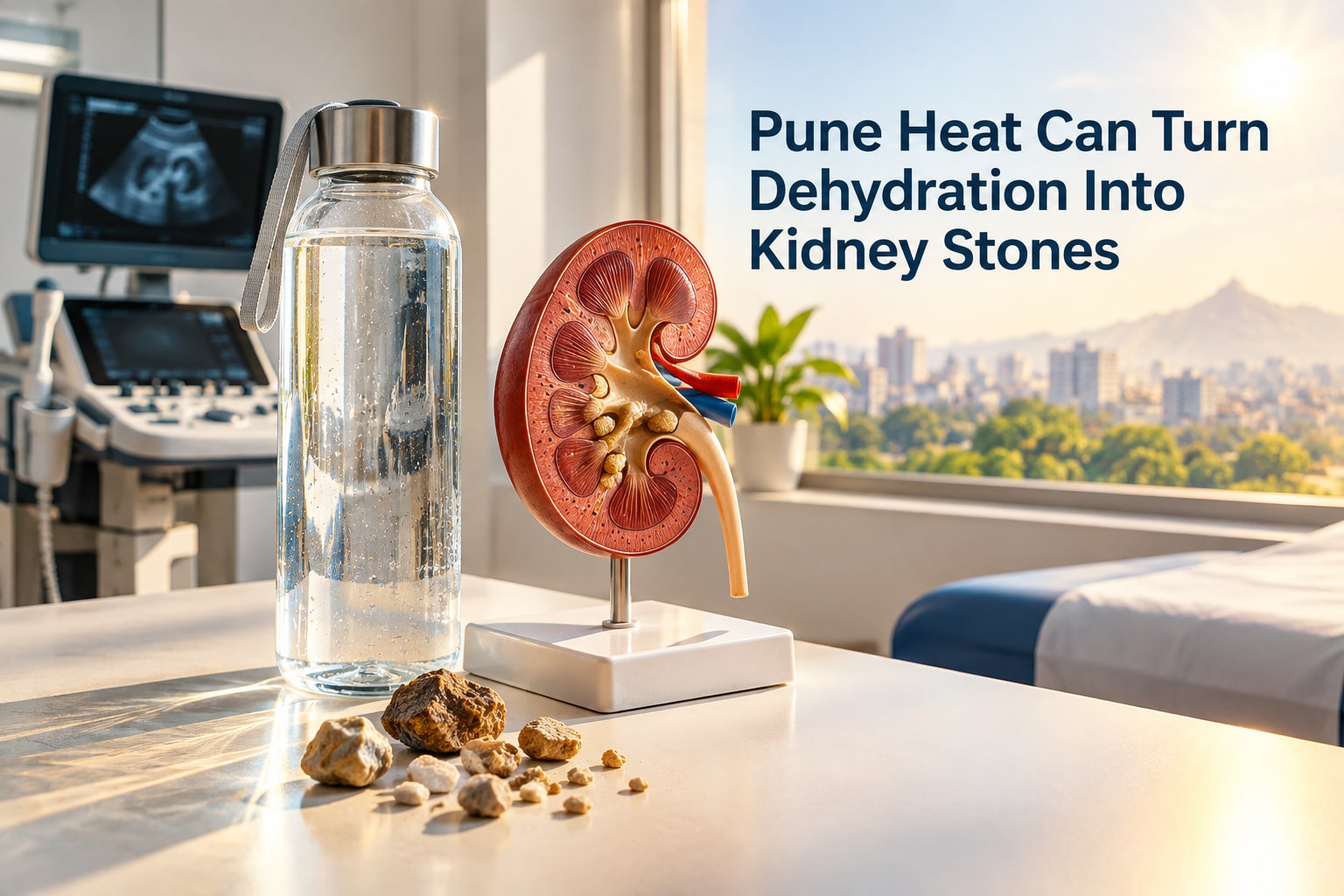
Heat, sweating and long periods outdoors can reduce urine volume, allowing calcium, oxalate and uric-acid salts to become concentrated enough to form or aggravate stones. You will learn how to maintain safer hydration, recognise kidney stone symptoms in summer in Pune, separate warning signs from heat illness or infection, and know when treatment cannot wait.
Key takeaways
- Drink enough water to keep urine pale yellow during hot weather.
- Severe flank pain, fever, vomiting or very little urine needs urgent care.
- Burning urination with fever points more strongly to a urinary infection.
- Doctors match stone treatment to its size, location, blockage and infection risk.
How Pune’s summer heat increases kidney stone risk
April to June heat raises kidney stone risk mainly through fluid loss. Sweating during hot daytime exposure, outdoor work, exercise or travel reduces the water available to make urine. The urine volume falls, so dissolved substances become more concentrated and crystals form more easily.
This is the main reason for kidney stones during summer in Pune; summer does not create a separate type of stone.
The concentrated urine can contain higher levels of stone-forming salts, including:
- Calcium salts
- Oxalate salts
- Uric-acid salts
Thirst is a poor early warning during heat and exertion. You can lose fluid before feeling strongly thirsty, especially while working outdoors, exercising, travelling or fasting. Replacing water with alcohol or heavily sweetened drinks does not restore hydration as reliably and can worsen fluid loss or dietary risk.
Heat does not automatically make an existing stone painful, but dehydration can reduce urine flow while a stone moves through the ureter. If the stone obstructs urine, pressure builds behind it and causes sudden wave-like flank or back pain that can spread towards the groin, with nausea or vomiting.
Burning urine, urgency or blood can occur too; fever with these symptoms needs prompt medical assessment because infection behind an obstruction is dangerous.
How to prevent kidney stones in hot weather
To prevent kidney stones in hot weather, do not wait for thirst. Sweating, exercise, outdoor work, fasting and travel can reduce urine volume before you feel thirsty, so drink at regular intervals and use urine colour as your check.
1. Carry water and sip throughout the day, including during outdoor work, exercise and long journeys. Aim for enough fluid to produce at least 2.5 litres of urine daily; in Pune’s heat, that often means drinking more than your usual amount.
2. Check your urine when you use the toilet. Pale-yellow urine usually indicates better hydration; consistently dark urine means you need more fluid. Do not treat “eight glasses” as a fixed target.
3. Replace sweat losses after exercise or outdoor work. Water is suitable for most sessions; avoid replacing water with heavily sweetened soft drinks, which add sugar without improving stone prevention.
4. Reduce salty foods such as packaged snacks, instant noodles, pickles and restaurant meals. High sodium increases urinary calcium, which can promote calcium stones.
5. Keep normal dietary calcium with meals rather than restricting milk, curd or other calcium-rich foods. Calcium eaten with food binds intestinal oxalate and can reduce its absorption.
6. Limit alcohol because it can worsen dehydration. Unsweetened citrus drinks may provide citrate, but lemon water does not dissolve an obstructing stone.
If you have heart failure, chronic kidney disease, dialysis treatment or a prescribed fluid restriction, ask your clinician for a safe fluid target before increasing intake.
Which symptoms point to a stone, infection or heat-related illness?
Recognising kidney stone symptoms in summer in Pune starts with the pain pattern. A stone usually causes sudden, severe pain in the side or back that comes in waves and travels towards the lower abdomen or groin. Nausea, vomiting, blood in the urine, urinary urgency or burning can accompany it.
A stone near the bladder can mimic an infection.
| Condition | Clues that point to it | What makes it less typical of a stone |
|---|---|---|
| Kidney stone | Wave-like flank pain, groin radiation, restlessness, blood in urine | Pain may ease and return as the stone moves |
| Urinary infection | Burning, frequent urination, cloudy or foul-smelling urine, fever or chills | Isolated colicky pain without fever is less typical |
| Dehydration or heat exhaustion | Thirst, dark urine, reduced urination, heavy sweating, weakness, dizziness, headache or cramps | Does not usually cause pain radiating from the flank to the groin |
| Another abdominal problem | Constant localised pain, marked tenderness, diarrhoea, abdominal swelling or pain linked to meals or movement | Flank-to-groin waves and blood in urine favour a stone |
Heat exhaustion and a stone can occur together after outdoor work or exercise. Fever, shaking chills, confusion, fainting, repeated vomiting, inability to pass urine or severe persistent pain needs prompt medical assessment. Do not assume every summer abdominal pain is a stone; appendicitis, gallbladder disease and bowel problems require different treatment.
When summer stone symptoms need urgent medical care
Do not try to flush a suspected stone with large amounts of water if you have severe pain, vomiting, faintness or trouble passing urine. Rapidly increasing fluid can raise pressure behind an obstructing stone and worsen pain; vomiting, reduced kidney function or a fluid restriction makes forced drinking unsafe.
| Finding | Why it needs prompt assessment | What to do |
|---|---|---|
| Severe or persistent flank pain | A stone may be stuck or causing obstruction | Seek same-day medical care |
| Fever, chills or feeling faint | An infected blocked kidney can deteriorate quickly | Go to emergency care |
| Repeated vomiting | You may become dehydrated and cannot take medicines or fluids | Seek urgent care |
| Little or no urine | The urinary tract may be blocked | Go to emergency care |
| One functioning kidney or known kidney disease | Obstruction can threaten remaining kidney function | Contact a doctor promptly |
| Pregnancy | Pain, infection and imaging choices require clinical assessment | Seek prompt medical advice |
Kidney stone symptoms in summer in Pune can include wave-like back or flank pain, groin pain, blood in urine, burning and urgency, but heat exhaustion and urinary infection can look similar. Do not assume modest pain means the kidney is safe; a stone can obstruct with limited symptoms.
Until assessed, take only small sips if you can keep fluids down, and follow advice from a clinician. Avoid forced hydration, alcohol and delaying care to see whether the stone passes.
How doctors choose summer kidney stone treatment in Pune
The right approach to summer kidney stone treatment in Pune depends on stone size, location, obstruction, infection, kidney function and symptom severity—not on the season. A small ureteric stone without infection or significant blockage may be managed with observation, prescribed pain relief and follow-up imaging.
| Option | What it means | When it applies |
|---|---|---|
| Observation and analgesia | Monitor passage while controlling pain and nausea | Small, uncomplicated stones in a stable patient |
| Ureteroscopy | A scope removes or fragments the stone inside the urinary tract | A stone remains stuck, causes persistent symptoms or blocks urine flow |
| Shock-wave lithotripsy | External shock waves break a suitable stone into smaller pieces | Selected stones based on size, location and imaging |
| Percutaneous nephrolithotomy | A specialist removes a larger or complex kidney stone through a small access tract | Large stone burden or anatomy unsuitable for simpler treatment |
Do not force large volumes of water to “flush” an obstruction; rising pressure can intensify pain and harm a kidney with reduced function. A non-steroidal anti-inflammatory drug is often used for renal colic when safe, but dehydration, kidney disease, ulcer disease, blood thinners and some heart conditions change that decision.
Seek prompt specialist assessment for severe or persistent pain, repeated vomiting, faintness, fever, inability to pass urine, one functioning kidney, pregnancy or known kidney disease. Even modest pain can accompany silent obstruction. VANDANA URO CARE can assess symptoms alongside urine tests and imaging before deciding whether waiting is safe.
Related service
Kidney Stone Treatment What is the best treatment for kidney stones? Image result for Kidney Stone Treatment Percutaneous Lithotripsy (PCNL) is the best treatment for large... View service → |
Frequently asked questions
How does Pune’s summer heat increase kidney stone risk?
Sweating reduces urine volume, concentrating dissolved substances and making crystal formation easier. Heat exposure, outdoor work, exercise and travel increase fluid loss.
How can you prevent kidney stones in hot weather?
Drink water regularly throughout the day, replace fluids during sweating, and monitor urine colour. Pale-yellow urine indicates better hydration than dark-yellow urine.
Which symptoms point to a stone, infection or heat-related illness?
A stone often causes sharp side or back pain, pain spreading toward the groin and blood in the urine. Burning urination and fever suggest infection. Heavy sweating, weakness, dizziness, confusion or collapse can signal heat-related illness.
When do summer kidney stone symptoms need urgent medical care?
Seek urgent care for severe or persistent pain, fever with urinary symptoms, repeated vomiting, confusion, fainting, or very little or no urine.
How do doctors choose summer kidney stone treatment in Pune?
Doctors assess the stone’s size and location, urine flow, kidney function, infection risk and symptoms before choosing observation, medication, a procedure or emergency drainage.