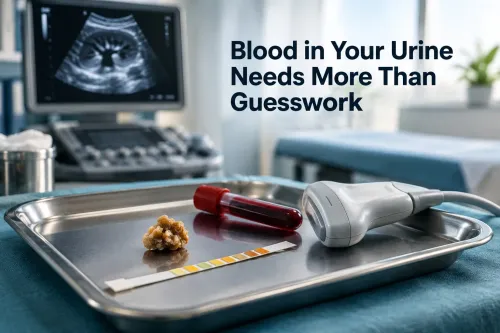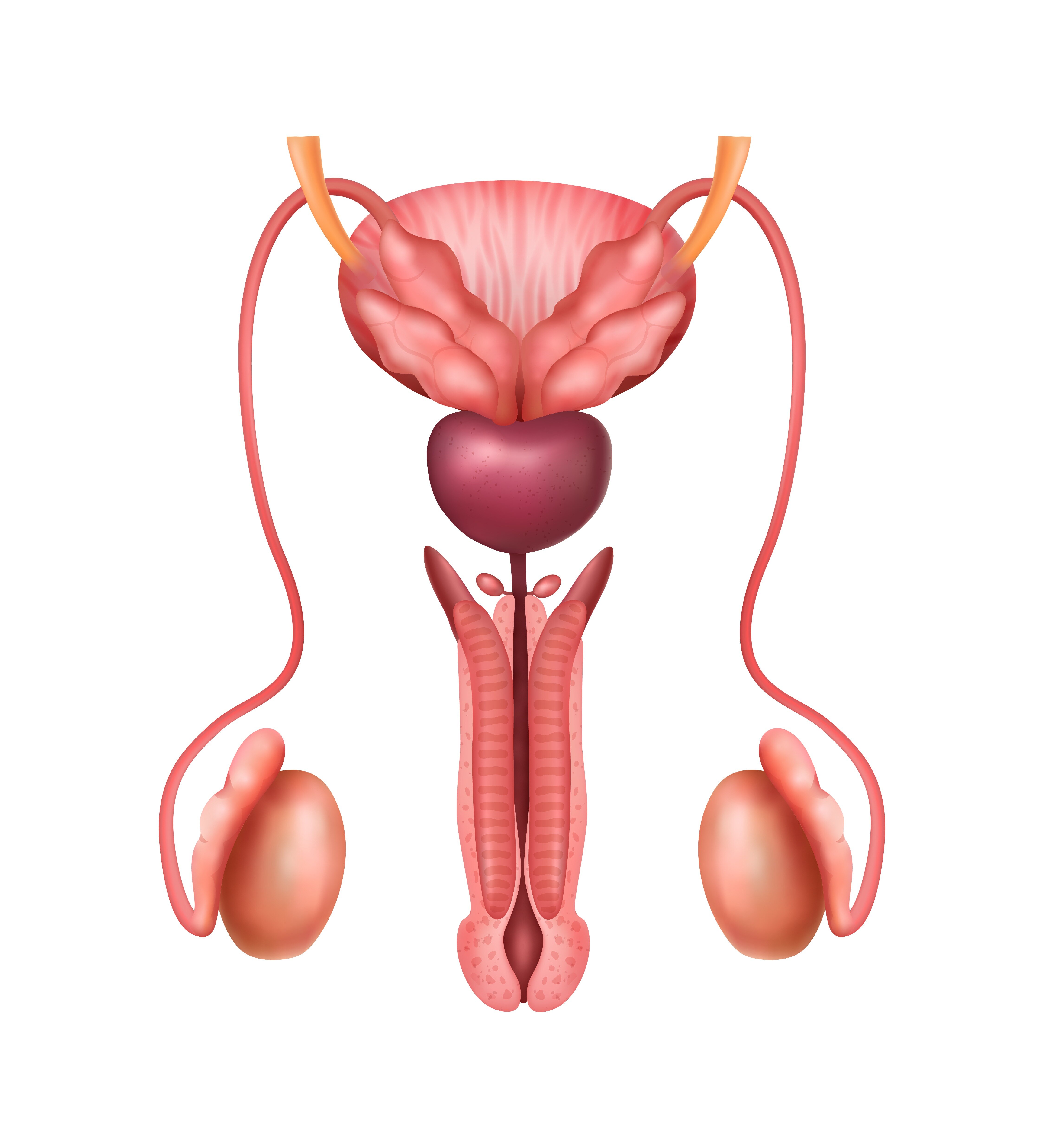
Prostate laser surgery treats obstruction from benign prostate enlargement; it does not remove, diagnose or cure a urinary bladder tumour. Before consenting, you need to establish the cause of your symptoms, complete any bladder-cancer work-up, and coordinate prostate treatment with the urologist managing your cancer risk or diagnosis.
Key takeaways
- Investigate visible blood in urine before treating presumed BPH.
- Confirm bladder cancer status and tumour plan before prostate surgery.
- Choose laser surgery only when obstruction—not cancer treatment—is the priority.
- Bring urine reports, scans, biopsy results and medication details to your Pune consultation.
What must be checked before prostate surgery when bladder cancer is a concern?
Before treating presumed benign prostatic hyperplasia (BPH), establish whether the symptoms and blood in the urine come from prostate obstruction at all. Visible haematuria, recurrent unexplained microscopic haematuria, clots, painful urination, urgency, recurrent urinary infections, a smoking history or abnormal imaging requires bladder assessment.
The differential diagnosis includes bladder cancer, infection, stones, urethral narrowing, an underactive bladder and prostate obstruction. A practical work-up may proceed as follows:
- Perform urine routine testing and culture, urine cytology, and kidney-function testing. Culture identifies infection; cytology can support suspicion of high-grade cancer.
- Use ultrasound or CT urography to examine the bladder, kidneys and ureters. The choice depends on risk factors and clinical findings.
- Perform cystoscopy to inspect the bladder lining directly. If a lesion is found, obtain a biopsy or perform transurethral resection of bladder tumour (TURBT).
- Review the tissue pathology before selecting prostate treatment. The report should identify tumour type, grade, invasion depth and, when relevant, whether detrusor muscle is present.
Cystoscopy and cytology can detect or support suspicion, but tissue pathology confirms cancer. Prostate laser surgery is not a substitute for bladder examination, tumour biopsy or staging scans.
Anyone searching for prostate laser surgery for urinary bladder cancer in Pune needs this distinction; a urinary bladder cancer consultation in Pune should establish the diagnosis and treatment sequence first.
Can prostate laser surgery be performed after bladder cancer is diagnosed?
Yes—prostate laser surgery can remain suitable after bladder cancer is diagnosed, but only after the bladder tumour and the prostate obstruction have separate treatment plans. A bladder laser procedure does not remove or treat a bladder tumour.
The timing depends on:
- Tumour location, size and bleeding risk
- The severity of prostate obstruction
- Active infection or positive urine culture
- Anticoagulant or antiplatelet use
- Need for TURBT or repeat TURBT
- Reliable tumour pathology, including stage and grade
- Intravesical treatment such as BCG
- Scheduled surveillance cystoscopies
A bladder and prostate procedure during one anaesthetic can be considered in selected cases. It is not automatic: combining them may be unsuitable when infection, uncontrolled bleeding risk, uncertain pathology or urgent cancer treatment takes priority.
| Option | Tissue result | Main implication |
|---|---|---|
| HoLEP | Enucleates prostate tissue and usually provides a specimen | The specimen can undergo histopathology for incidental prostate findings |
| GreenLight or PVP | Vaporises much of the prostate tissue and generally provides little or no specimen | It offers limited tissue for prostate pathology |
Prostate tissue pathology does not diagnose or exclude bladder cancer. A bladder tumour still needs bladder-directed assessment, usually including cystoscopy and TURBT when indicated.
A bladder cancer urologist in Pune should coordinate operative timing, TURBT or BCG records, pathology reports and follow-up cystoscopies. If you are comparing prostate laser surgery in Pune, ask who will protect the cancer-surveillance schedule rather than treating both conditions as one problem.
Which prostate treatment is appropriate, and when is laser surgery the wrong first choice?
Laser is suitable only when benign prostate obstruction is the problem and the bladder has been assessed. Comparing prostate surgery options in Pune means weighing anatomy, obstruction, bladder function, bleeding risk and follow-up—not choosing the word “laser.”
| Option | Best fit | Main trade-offs |
|---|---|---|
| HoLEP | Small to very large obstructing prostates; tissue enucleation | Low bleeding potential, catheter and hospital time often short, but requires experienced surgeon and specialised equipment; retreatment risk is low; tissue is available for pathology |
| Photoselective vaporisation | Selected small or medium prostates, especially when bleeding risk matters | Vaporised tissue gives little or no specimen; equipment and surgeon experience matter; retreatment can be higher in some settings |
| TURP | Moderate obstruction with accessible anatomy | Provides tissue, but bleeding, catheter duration and hospital stay can exceed those of some laser procedures |
| Simple prostatectomy | Very large prostates or difficult anatomy | More invasive, with longer recovery and hospital stay; useful when endoscopic treatment is unsuitable |
| BPH medicines | Mild symptoms, acceptable flow or high operative risk | No surgical recovery, but symptoms can persist, side effects continue and obstruction may progress |
Ask how anticoagulants will be managed; do not stop them without the prescribing clinician. Discuss catheter duration, hospital stay, retreatment risk, equipment, surgeon experience and access to follow-up. HoLEP, TURP and other outlet procedures can cause retrograde ejaculation or reduced semen emission. That is different from erectile dysfunction and matters before consent.
Do not make prostate laser surgery for urinary bladder cancer in Pune the first choice with unexplained visible haematuria, an uninvestigated bladder mass, active infection, unsafe anticoagulant interruption, severe bladder dysfunction or symptoms unrelated to obstruction. Stabilise or investigate first.
Surgery can improve flow when obstruction causes it, but urgency, frequency or poor emptying can persist when bladder muscle dysfunction or cancer drives symptoms.
What preparation and recovery issues affect the timing of surgery and cancer surveillance?
Before scheduling surgery, give the urologist the exact name and dose of every anticoagulant or antiplatelet drug, such as apixaban 5 mg or clopidogrel 75 mg. Do not stop or alter these medicines without instructions from the prescribing clinician.
A urinary bladder cancer consultation in Pune should also review urine culture, kidney-function testing, anaesthesia suitability, and any prior bladder cancer, pelvic radiation, TURBT, catheterisation or other urinary procedure.
- Plan for a catheter for the period specified by your surgeon. Temporary burning, frequency, urgency and urine leakage can occur after removal; follow the prescribed hydration instructions rather than forcing fluids.
- Confirm lifting restrictions, driving advice, and the expected time away from work. Arrange the planned catheter check, pathology review and postoperative appointment before discharge.
- Treat short-term pink or lightly blood-stained urine as expected only within the recovery window your surgeon gives you. Seek urgent help for heavy bleeding, clots that block urine flow, fever, inability to pass urine, or recurrent visible haematuria after that window.
Prostate surgery does not prevent bladder-cancer recurrence. Keep every scheduled cystoscopy and urine test, and do not delay intravesical treatment such as BCG or pathology review while recovering from prostate surgery. These appointments determine whether cancer surveillance remains on track.
How should you choose a Pune urologist and prepare for the consultation?
Choose a Pune urologist who treats the diagnostic problem, not just the advertised device. For a urinary bladder cancer consultation in Pune, compare a bladder cancer urologist in Pune by experience with the named technique, pathology access, cancer follow-up and response to postoperative warning signs.
Take these records:
- Cystoscopy reports, TURBT or biopsy pathology, and previous operation records.
- CT or ultrasound images, urine cytology, urine cultures and kidney-function results.
- A complete medication list, including the exact anticoagulant or antiplatelet name and dose.
Ask:
- What is confirmed, and what remains suspected? What are the tumour stage and grade?
- Is the immediate goal diagnosis, complete tumour removal, staging, obstruction relief or surveillance?
- Which procedure supplies tissue to pathology? Could bladder and prostate procedures be combined?
- What alternatives, anaesthesia, catheter duration, activity restrictions, side effects and retreatment risks apply?
Ask for a written cost and appointment plan covering consultation, investigations, procedure, pathology, hospital stay and follow-up. Do not rely on a single package price.
Compare prostate surgery options in Pune using evidence, not the word laser. For prostate laser surgery in Pune, check:
| Criterion | What to verify | Why it matters |
|---|---|---|
| Technique | Surgeon’s cases with the proposed method | Experience affects selection and execution |
| Pathology | How specimens reach and are reviewed by pathology | Tissue findings guide cancer decisions |
| Follow-up | Cystoscopy access and warning-sign response | Surveillance cannot be skipped |
VANDANA URO CARE can be considered when you want coordinated assessment of suspected bladder malignancy and prostate obstruction.
Related service
Prostate Laser Surgery Prostate laser surgery is used to relieve moderate to severe urinary symptoms caused by an enlarged prostate — a condition known as benign prostatic... View service → |
Frequently asked questions
What must be checked before prostate surgery when bladder cancer is a concern?
Assess visible or recurrent microscopic haematuria with urine testing, imaging and bladder evaluation. Cystoscopy and tissue sampling are used when findings require direct assessment.
Can prostate laser surgery be performed after bladder cancer is diagnosed?
Yes, in selected patients, after the urologist establishes the bladder cancer treatment plan, tumour location and bleeding risk. Cancer treatment takes priority when both conditions compete.
When is prostate laser surgery the wrong first choice?
It is not the first choice when bleeding has an unexplained cause, bladder cancer needs urgent treatment, infection is uncontrolled, or the prostate and bladder findings have not been separated.
What affects the timing of prostate surgery and bladder cancer surveillance?
Tumour treatment, catheter use, urinary infection, blood-thinning medicines, healing and the schedule for repeat cystoscopy or imaging all affect timing.
How should you prepare for a Pune urologist consultation?
Bring haematuria and urine-test reports, ultrasound or CT images, cystoscopy and biopsy records, medication names, blood-thinner details, smoking history and prior operation notes.